A Comprehensive Guide to Additives for Film Applications: What to Use and When
How the right additive package transforms polymer films into high-performance engineered materials. Film production is …

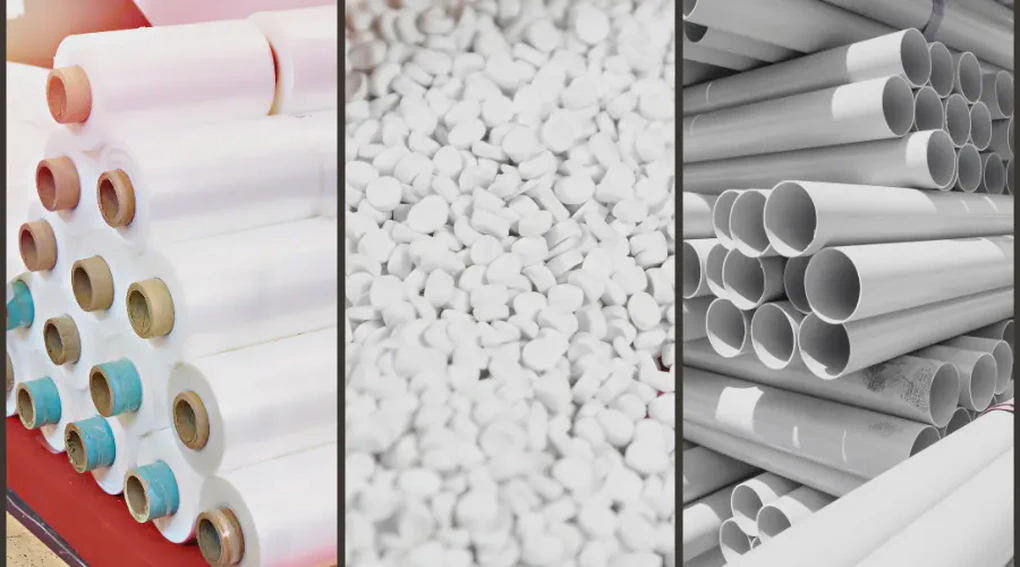
Many manufacturers assume all white masterbatch delivers similar results. But just like choosing between standard black and jet black masterbatch, white masterbatch selection requires matching the grade to your specific application. Using the wrong grade either wastes money through over-engineering or compromises product quality through under-specification.
White masterbatch achieves its opacity and brightness primarily through titanium dioxide (TiO2) pigment dispersed in a carrier resin. However, not all white masterbatch is created equal. The concentration of TiO2, its grade quality, particle size, and dispersion technology determine both performance and cost efficiency. Understanding these differences helps manufacturers optimize their material selection for the best balance of quality and economics.
Standard white masterbatch serves as the workhorse for applications where good opacity is needed but premium brightness isn’t critical. With TiO2 concentrations typically ranging from 50-60%, it provides adequate performance for thick-walled products and non-consumer-facing applications.
Key characteristics:
High-opacity white masterbatch is engineered for applications demanding maximum efficiency and premium appearance. With TiO2 concentrations of 70-80%, it delivers excellent opacity even in thin films while often reducing total material costs through lower loading requirements.
Key characteristics:
Standard white masterbatch excels in applications where wall thickness provides inherent opacity or where the product isn’t consumer-facing. Here’s where it makes the most sense:
Waste bags need opacity to hide contents, but premium brightness doesn’t affect their function or market acceptance. Standard white at 4-5% loading delivers adequate performance while maximizing cost savings on these high-volume commodity products.
Pallet wrap, protective films, and industrial liners serve functional purposes rather than aesthetic ones. These applications benefit from standard white masterbatch at 4-6% loading, providing sufficient opacity without unnecessary premium features.
Products with wall thickness exceeding 2mm—such as buckets, storage containers, and industrial pails—achieve excellent opacity easily. The thickness itself contributes significantly to opacity, making high-concentration TiO2 unnecessary. Standard white at 3-4% loading delivers perfectly acceptable results.
Mulch films spend their life buried or in ground contact. While UV protection matters for longevity, premium brightness provides zero functional benefit. Standard white at 5-6% loading focuses resources on durability rather than appearance.
Sewage pipes, drainage systems, and other buried applications represent the clearest case for standard white masterbatch. Since nobody sees these products after installation, premium appearance literally has zero value. Loading at 3-4% provides necessary opacity while optimizing costs.
High-opacity white masterbatch justifies its higher per-kg cost in applications where appearance matters, thickness is limited, or total material efficiency creates cost savings. Consider these scenarios:
Thin films ranging from 20 to 50 microns present a unique challenge: achieving opacity with minimal material. High-opacity white at 2.5-3% loading delivers excellent coverage that standard white can’t match even at 5-6% loading. Additionally, the bright white finish signals freshness and quality to consumers—a subtle but important factor in purchasing decisions. The reduced loading often results in lower total material cost despite higher masterbatch pricing.
Personal care bottles, household product containers, and retail packaging compete for consumer attention on crowded shelves. Premium white appearance conveys quality and cleanliness, directly influencing purchasing decisions. High-opacity white at 3-4% loading delivers the bright finish that brand positioning demands.
Dairy packaging serves dual purposes: protecting the product from light-induced degradation while signaling purity to consumers. High-opacity white masterbatch with premium Rutile TiO2 excels at both. Loading at 3-4% blocks harmful light wavelengths while delivering the bright white finish that consumers associate with fresh dairy products.
Above-ground water supply installations must meet IS color coding standards that specify precise Lab* values. High-opacity white at 2.5-3.5% loading ensures compliance while providing UV resistance through Rutile-grade TiO2. The professional appearance matters in infrastructure projects where quality perception affects contractor and project manager decisions.
High-value products demand packaging that reflects their premium positioning. Cleanliness perception is critical in these categories, and dull or grayish white sends the wrong signal. High-opacity white at 3-4% loading delivers the brilliant finish that aligns with product value.
Retail shopping bags serve as mobile advertisements for brands. Achieving opacity in bags thinner than 30 microns requires maximum TiO2 efficiency. High-opacity white at 2.5-3% loading delivers both the coverage and brightness that premium retail brands demand.
At STIC, we use premium Rutile-grade TiO2 in our masterbatch formulations. Rutile TiO2 offers superior opacity due to its higher refractive index, excellent UV resistance for outdoor applications, and better long-term brightness retention. This ensures that products maintain their appearance and performance over extended periods, whether facing weather exposure or demanding premium aesthetics.
Product thickness fundamentally determines masterbatch requirements:
Thin products (less than 1mm) require high-opacity masterbatch because every percentage point of loading matters. Films, thin-walled bottles, and shopping bags fall into this category. Standard white often fails to achieve target opacity even at elevated loading rates, making high-opacity the only viable choice.
Thick products (greater than 2mm) work perfectly well with standard white masterbatch. Buckets, containers, and structural components have sufficient wall thickness to achieve excellent opacity without high TiO2 concentration. Using high-opacity for these applications represents unnecessary over-engineering.
Masterbatch carrier resin must match your base polymer for optimal performance:
Carrier mismatch creates multiple problems: poor pigment dispersion leading to streaking or specks, processing difficulties from temperature incompatibility, mechanical property reduction, and inconsistent opacity across production batches.
TiO2 efficiency depends entirely on particle dispersion quality. Optimal particle size of 0.2-0.3 microns provides maximum light scattering efficiency. Poor dispersion means agglomerated particles that don’t contribute to opacity—you’re literally paying for wasted pigment. Quality manufacturing using twin-screw extrusion and high-shear mixing ensures every TiO2 particle works effectively.
The common misconception is simple: “High-opacity white costs more per kg, so it’s more expensive to use.” But material economics work differently.
Total material cost equals masterbatch price per kg multiplied by the loading percentage required. Consider a 40-micron packaging film:
Standard white might require 5% loading to achieve target opacity. While the per-kg price is lower, you’re incorporating more material into every kg of final product.
High-opacity white typically needs only 3% loading for the same opacity. Despite higher per-kg pricing, the reduced loading often results in 10-15% lower total material cost—while simultaneously delivering better brightness and consistency.
A flexible packaging manufacturer struggled with inconsistent opacity in 35-micron LDPE films despite using 5.5% standard white masterbatch. Customer complaints about “see-through” areas were increasing.
After switching to STIC high-opacity white masterbatch at 3% loading, results were dramatic:
The improved TiO2 dispersion in high-opacity masterbatch eliminated the opacity variation that had plagued their previous supplier’s product.
An HDPE milk bottle manufacturer received consistent feedback that their bottles appeared dull and grayish compared to competitor products. Brand owners were requesting improvements.
Upgrading to high-opacity white masterbatch formulated with premium Rutile TiO2 delivered multiple benefits:
A pipe manufacturer was using high-opacity white masterbatch across all product lines—both underground sewage pipes and visible water supply installations.
By implementing an application-based masterbatch strategy, they achieved:
The key insight: not all applications require premium masterbatch—matching grade to visibility and requirements optimizes costs without compromising where appearance matters.
At STIC (Sonali Technology and Innovation Center), we offer comprehensive white masterbatch formulations engineered for specific applications rather than one-size-fits-all approaches.
Our Standard White Range features 50-60% TiO2 concentration with multiple carrier options including HDPE, LDPE, PP, and PVC. Every batch includes consistent quality with documented Certificate of Analysis (COA).
Our High-Opacity Range delivers 70-80% TiO2 concentration using premium Rutile grade for maximum efficiency. Carrier resins are matched to application requirements, and we guarantee ΔE < 0.5 batch-to-batch color consistency.
Custom Formulations are developed based on your specific needs:
Understanding white masterbatch selection delivers tangible business benefits:
Match grade to application - Over-engineering wastes money on unnecessary performance; under-specification compromises product quality and brand perception
Total cost beats price per kg - High-opacity white often delivers lower total material cost despite higher per-kg pricing through superior loading efficiency
Wall thickness determines requirements - Thin products demand high-opacity; thick products work effectively with standard white
Retail demands premium - Consumer-facing products justify high-opacity masterbatch; industrial products don’t require it
Dispersion quality matters - Poorly dispersed TiO2 wastes money regardless of concentration
Premium Rutile TiO2 - STIC uses Rutile-grade TiO2 for superior UV resistance and long-term brightness retention
Carrier must match polymer - Mismatched carrier resin causes quality issues and processing problems
Choosing between standard and high-opacity white masterbatch requires understanding your specific application requirements, cost constraints, and performance expectations. At STIC, we work directly with manufacturers to optimize white masterbatch selection for the ideal balance of quality and economics.
We provide:
Contact STIC - Sonali Technology and Innovation Center
Engineering masterbatch solutions for real-world applications for over 20 years.
How the right additive package transforms polymer films into high-performance engineered materials. Film production is …
Inside the Pellet: How Antioxidant Masterbatches Are Formulated and Tested Small in size. Massive in science. Every …
With 80,000 MTA capacity and world-class manufacturing across India, Sonali delivers plastic solutions trusted around the globe.
Contact Us