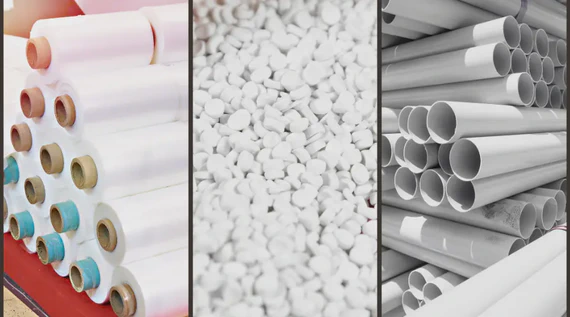
White Masterbatch: Standard vs. High-Opacity Selection Guide for Manufacturers
White Masterbatch: Standard vs. High-Opacity Selection Guide Many manufacturers assume all white masterbatch delivers …

If you are new to plastic manufacturing — or evaluating masterbatch suppliers for the first time — the terminology can be overwhelming. Masterbatch, concentrate, compound, additive, carrier resin — these terms get used loosely, and the distinctions matter.
This guide explains what masterbatch is, how it works, the different types available, and what to look for when selecting the right masterbatch for your application.
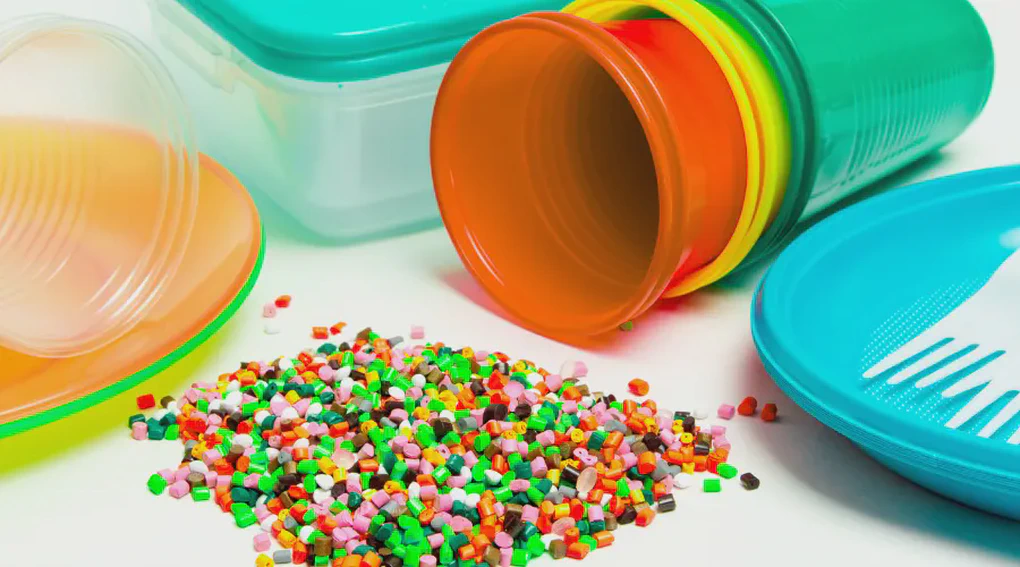
Masterbatch is a concentrated mixture of pigments, additives, or functional agents that are uniformly dispersed in a carrier resin and processed into pellet form. It is added to a base polymer during the plastic manufacturing process to impart specific properties to the final product.
Think of masterbatch as a highly concentrated ingredient. A small quantity, when properly mixed into a larger volume of base resin, delivers consistent colour, protection, or functional performance across the entire product.
Masterbatch is used across virtually every plastic processing method — blown film extrusion, injection moulding, blow moulding, pipe extrusion, fibre spinning, sheet extrusion, and more.
During plastic processing, the base resin pellets and masterbatch pellets are fed together into the hopper of an extruder or moulding machine. As the material passes through the heated barrel and screw, the masterbatch melts and disperses uniformly into the base resin melt.
The result is a finished product with consistent colour, UV protection, flame retardancy, or other functional properties — depending on the type of masterbatch used.
The key to performance is dispersion quality. A well-formulated masterbatch, processed under the right conditions, distributes its active ingredients uniformly throughout the polymer matrix — ensuring consistent results across every production run.
Masterbatch is broadly classified into three categories — colour masterbatch, white and black masterbatch, and additive masterbatch. Here is a detailed overview of each type.
White masterbatch is one of the most widely used masterbatch types in plastic manufacturing. It contains titanium dioxide (TiO₂) as the primary pigment, dispersed in a compatible carrier resin.
What it does: Imparts white colour, opacity, and brightness to plastic products. TiO₂ provides high hiding power — meaning a relatively small loading level can effectively cover the natural colour of the base resin.
Where it is used:
Key selection criteria: TiO₂ grade, particle size, and dispersion quality determine the whiteness, opacity, and surface finish of the final product. Not all white masterbatches are equal — the TiO₂ content, carrier resin compatibility, and dispersion technology vary significantly between suppliers.
Black masterbatch contains carbon black as the primary pigment — one of the most versatile and widely used additives in plastic manufacturing.
What it does: Imparts jet black colour and UV screening to plastic products. Carbon black is highly efficient — at the right loading level, it delivers strong colour and a degree of UV protection, making it suitable for outdoor and UV-exposed applications.
Where it is used:
Key selection criteria: Carbon black particle size, structure, and loading level in the final product determine colour quality and UV protection performance. For UV-critical applications such as pipes and agricultural films, carbon black content and dispersion quality are particularly important — and should be validated against relevant product standards.
Colour masterbatch covers the full spectrum — from standard colours to custom shades developed to match specific Pantone, RAL, or proprietary colour standards.
What it does: Imparts precise, consistent colour to plastic products across production runs. A well-formulated colour masterbatch delivers colour consistency, heat stability, and compatibility with the base resin and processing conditions.
Where it is used:
Key selection criteria: Pigment selection, heat stability, lightfastness, and carrier resin compatibility are the primary factors. For food contact or medical applications, pigment compliance with applicable regulations is an additional requirement that should be confirmed with the supplier.
Filler masterbatch contains inorganic fillers — most commonly calcium carbonate (CaCO₃) or talc — dispersed in a polymer carrier at high concentration.
What it does: Partially replaces the base resin in the formulation, helping to reduce raw material cost. At the right loading level for the specific application, filler masterbatch can also contribute to improved stiffness and dimensional stability. Loading levels vary significantly by application and product requirement.
Where it is used:
Key selection criteria: Filler particle size, surface treatment, and carrier resin compatibility determine both the cost benefit and the impact on mechanical properties. Exceeding the optimal loading level for a given application can increase brittleness and reduce tensile strength — the right balance is application-specific and should be determined through trials.
Example in practice: A manufacturer producing PP woven sacks may add white masterbatch, UV stabilizer masterbatch, and filler masterbatch together to their base PP resin during extrusion. The base resin provides structural strength, white masterbatch delivers opacity and colour, UV masterbatch ensures outdoor durability, and filler masterbatch helps reduce raw material cost — the specific loading of each depends on the product specification and end-use requirement.
Additive masterbatch is a broad category that covers all masterbatches designed to impart functional properties to plastic products — beyond colour. Rather than changing the appearance of the material, additive masterbatches modify how the plastic performs in its end-use environment.
Additive masterbatches are used across every major plastic processing method and application — from agricultural films and electrical cables to medical packaging and consumer goods. They allow manufacturers to introduce precise, controlled concentrations of functional additives into the base resin at the processing stage — without handling raw additive powders or liquids directly.
Here is an overview of the most widely used additive masterbatch types:
UV Stabilizer Masterbatch Protects plastic products from photodegradation caused by prolonged UV exposure. Helps prevent colour fading, surface chalking, embrittlement, and loss of tensile strength in outdoor applications. The right UV stabilizer system — and its loading level — depends on the base polymer, product geometry, geographic UV intensity, and required service life. Used in agricultural films, irrigation pipes, shade nets, construction sheets, and outdoor furniture.
Antioxidant Masterbatch Helps protect the polymer from thermal oxidation during processing and in service. Can help prevent yellowing and loss of mechanical properties caused by heat and oxygen exposure. Commonly used across a wide range of polymer processing applications, though some base resins are supplied pre-stabilised — check with your resin supplier before adding antioxidant masterbatch.
Slip Masterbatch Reduces the coefficient of friction on the surface of plastic films and moulded products. Improves handling, processing, and packaging line performance. Used in blown films, cast films, flexible packaging, and bags.
Antiblock Masterbatch Prevents plastic films from sticking together during production, winding, and storage. Works by creating microscopic surface irregularities that reduce contact area between film layers. Used in blown film, cast film, and flexible packaging applications.
Antistatic Masterbatch Reduces the build-up of static electricity on the surface of plastic products. Helps prevent dust attraction and discharge-related issues in sensitive applications. Used in electronics packaging, FIBC bags, cleanroom components, and film applications.
Optical Brightener Masterbatch Absorbs UV radiation and re-emits it as visible blue light — creating a brighter, whiter appearance in plastic products. Used in packaging films, woven sacks, fibres, and applications where enhanced whiteness or brightness is required.
Anti-Fog Masterbatch Helps prevent water droplets from forming on the surface of plastic films — maintaining transparency and appearance in humid or temperature-variable environments. Used in food packaging films, greenhouse films, and agricultural applications.
Nucleating Agent Masterbatch Accelerates and refines the crystallisation process in semi-crystalline polymers — contributing to improved stiffness, dimensional stability, and cycle times in processing.
Clarifying Agent Masterbatch A specialty nucleating agent primarily used in polypropylene to improve optical clarity, surface gloss, and dimensional consistency. Most commercial clarifying agent grades are formulated specifically for PP — compatibility with other base polymers should be confirmed with the supplier. Used in food containers, medical packaging, cosmetic jars, and thin-wall injection moulded products.
Flame Retardant Masterbatch Helps reduce ignitability, flame spread, and smoke emission in plastic products. Works by interrupting the combustion cycle through one or more mechanisms — char formation, gas suppression, or thermal cooling. Product compliance with specific fire safety standards should be validated against the relevant standard for your application and market. Used in electrical cables, switch boxes, appliance housings, building materials, and automotive components.
Selecting the right additive masterbatch — or the right combination — depends on the base polymer, processing conditions, end-use environment, and performance requirements of the final product. Many applications benefit from more than one additive system working together — for example, UV stabiliser combined with antioxidant for long-life outdoor films, or flame retardant combined with antistatic for electronics packaging.
Different plastic products require different combinations of masterbatch types. The table below provides a general reference guide across major product categories — specific requirements for your application should be confirmed with your masterbatch supplier.
| Plastic Product | White | Black | Colour | Filler | Antioxidant | Optical Brightener | Slip | Antiblock | Antistatic | UV Stabilizer | Anti-Fog | Clarifying Agent | Flame Retardant |
|---|---|---|---|---|---|---|---|---|---|---|---|---|---|
| Packaging Films & Bags | ✓ | ✓ | ✓ | ✓ | ✓ | ✓ | ✓ | ✓ | ✓ | ✓ | |||
| Woven Sacks, FIBC & Raffia | ✓ | ✓ | ✓ | ✓ | ✓ | ✓ | ✓ | ✓ | ✓ | ||||
| Agricultural & Greenhouse Films | ✓ | ✓ | ✓ | ✓ | ✓ | ✓ | ✓ | ✓ | ✓ | ||||
| Pipes & Fittings | ✓ | ✓ | ✓ | ✓ | ✓ | ✓ | |||||||
| Food & Beverage Packaging | ✓ | ✓ | ✓ | ✓ | ✓ | ✓ | ✓ | ||||||
| Medical & Pharmaceutical | ✓ | ✓ | ✓ | ✓ | ✓ | ✓ | |||||||
| Cosmetics & Personal Care | ✓ | ✓ | ✓ | ✓ | ✓ | ✓ | |||||||
| Electrical & Electronics | ✓ | ✓ | ✓ | ✓ | ✓ | ✓ | ✓ | ✓ | |||||
| Automotive Components | ✓ | ✓ | ✓ | ✓ | ✓ | ✓ | ✓ | ✓ | |||||
| Outdoor & Construction | ✓ | ✓ | ✓ | ✓ | ✓ | ✓ | ✓ | ||||||
| Fibres, Yarns & Nonwovens | ✓ | ✓ | ✓ | ✓ | ✓ | ✓ | ✓ | ✓ | ✓ | ||||
| Water Tanks & Storage | ✓ | ✓ | ✓ | ✓ | ✓ | ✓ | |||||||
| Geomembranes & Geotextiles | ✓ | ✓ | ✓ | ✓ | ✓ | ✓ |
Selecting the right masterbatch involves more than matching a colour or picking a standard grade. Here are the key factors to evaluate:
Base polymer compatibility: The carrier resin in the masterbatch must be compatible with your base resin. Incompatible carrier resins can cause dispersion problems, surface defects, and mechanical property loss.
Processing method and conditions: Extrusion, injection moulding, blow moulding, and fibre spinning all have different temperature profiles, shear conditions, and residence times. The masterbatch should be formulated to perform within your specific processing window.
End-use requirements: UV exposure, flame retardancy, food contact compliance, optical clarity, or cost optimisation — each end-use requirement points to a different masterbatch type and formulation.
Loading level: The optimal loading level balances performance and cost. Under-loading can deliver insufficient protection or colour. Over-loading adds cost without proportional benefit and may negatively affect mechanical properties. Loading levels should be determined through trials and validated for your specific application.
Supplier technical support: A reliable masterbatch supplier should be able to recommend the right grade, assist with loading level optimisation, and provide technical support when processing issues arise.
Masterbatch is a precision tool in plastic manufacturing. The right masterbatch — correctly selected, properly dosed, and processed under controlled conditions — delivers consistent colour, protection, and performance across every production run.
Understanding the different types of masterbatch, how they work, and what to look for in a formulation is the foundation of making better material decisions — and producing better plastic products.
For technical guidance on masterbatch selection for your specific application, get in touch with the Sonali Group technical team.
White Masterbatch: Standard vs. High-Opacity Selection Guide Many manufacturers assume all white masterbatch delivers …
How the right additive package transforms polymer films into high-performance engineered materials. Film production is …
With 80,000 MTA capacity and world-class manufacturing across India, Sonali delivers plastic solutions trusted around the globe.
Contact Us