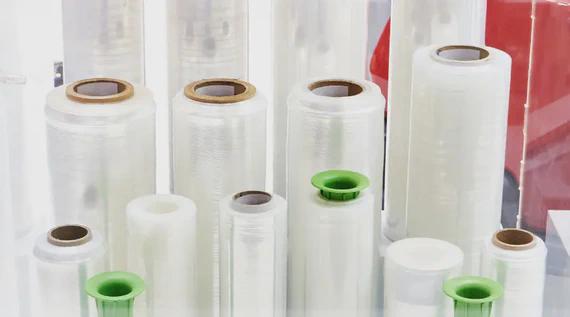
A Comprehensive Guide to Additives for Film Applications: What to Use and When
How the right additive package transforms polymer films into high-performance engineered materials. Film production is …

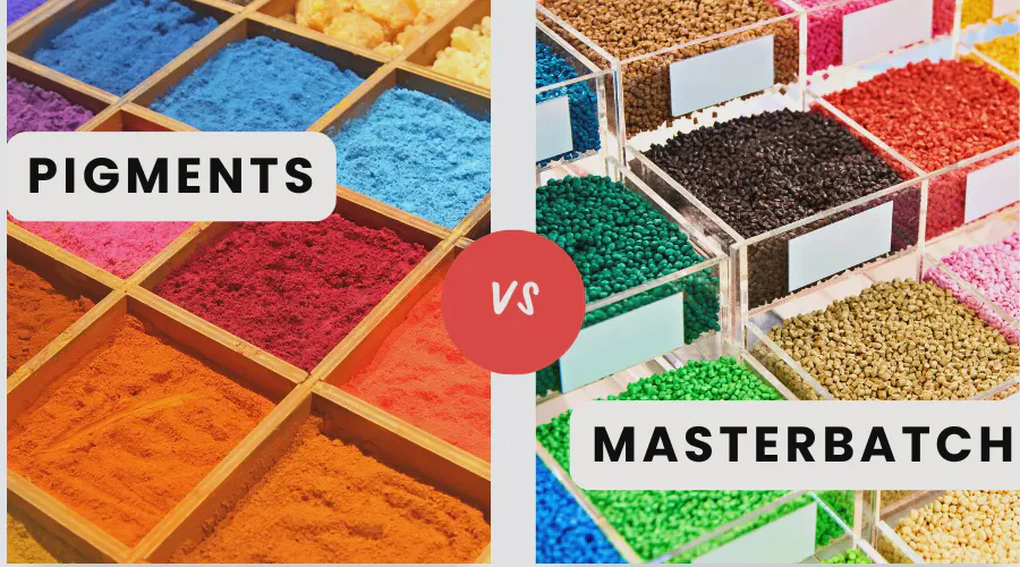
In manufacturing, the cheapest option on paper rarely turns out to be the most cost-effective in practice. This truth becomes painfully evident when we examine the real costs of using raw pigments versus masterbatch in plastic coloring. While procurement teams often gravitate toward raw pigments due to their lower unit price, the hidden costs buried in production operations tell a very different story.
At first glance, the numbers seem straightforward. Raw pigments typically cost between $2-4 per kilogram, while masterbatch can range from $1-5 per kilogram depending on formulation. The lower end of the pigment price range naturally attracts budget-conscious buyers. But this comparison is like judging a car purchase solely on the sticker price while ignoring fuel efficiency, maintenance costs, and reliability.
The real question isn’t “What does it cost to buy?” but rather “What does it cost to use?”
Raw pigment powder has a fundamental problem—it doesn’t stay where you put it. The fine particles become airborne during handling, coating equipment, floating through your facility, and ultimately disappearing into ventilation systems. Industry data shows that dust-related losses can reach 5-10% of total pigment volume.
Think about that for a moment. You’re purchasing 100 kilograms of pigment, but only 90-95 kilograms actually make it into your products. The rest? You’ve quite literally paid for air pollution in your own facility.
Raw pigments demand careful, manual handling at multiple stages of your production process. Operators must:
This isn’t value-added labor—it’s maintenance work that your skilled operators shouldn’t be doing. Studies indicate that the handling complexity of raw pigments can increase labor costs by 10-15% compared to masterbatch systems. That’s not just money; it’s also opportunity cost. Your team could be optimizing processes, solving production challenges, or training on new equipment instead of babysitting pigment powder.
Every color change in a pigment-based system creates a production bottleneck. Pigment particles embed themselves in mixing equipment, contaminating subsequent batches if cleaning isn’t thorough. Your operators face an impossible choice: rush the cleaning and risk contamination, or clean properly and sacrifice production capacity.
Those “quick” changeovers you planned for 30 minutes? They’re actually taking 60-90 minutes when you factor in proper cleaning protocols. Multiply this across multiple color changes per day, and you’re losing hours of productive capacity every single week.
Perhaps the most expensive hidden cost is quality inconsistency. Raw pigment dispersion is part science, part art. Achieving uniform color distribution requires precise mixing parameters, and even small variations create visible problems:
Every rejected product represents wasted material, wasted energy, wasted labor, and potentially lost customer relationships. Your “savings” on raw pigment evaporate the moment you have to scrap or rework a batch.
Masterbatch represents a fundamentally different approach to plastic coloring. Rather than managing loose powder, you’re working with pre-engineered pellets where pigments are already dispersed in a compatible carrier resin.
Masterbatch operations are remarkably straightforward:
No weighing powder. No dust management. No mixing concerns. No cleaning complications between colors. Your operators can focus on running production efficiently rather than managing colorant logistics.
The engineering behind masterbatch creates genuine performance advantages. Pigments are pre-dispersed at optimal concentrations (typically 20-50% by weight) within a carrier resin that’s compatible with your base polymer. When you’re processing polypropylene, you use a polypropylene-based masterbatch. When working with polyethylene, you use a polyethylene carrier.
This carrier matching eliminates melt viscosity mismatches and ensures uniform dispersion without the equipment complications of raw pigments. The result? Consistent color across every product, every batch, every production run.
Here’s a counterintuitive reality: you’ll actually use less pigment overall with masterbatch. Because the pigment is already optimally dispersed, you achieve full color value with lower addition rates. Raw pigments, by contrast, never achieve complete dispersion, meaning you need to add more pigment to compensate for the portion that doesn’t disperse effectively.
Modern masterbatches go beyond simple coloring. A single masterbatch pellet can deliver:
This consolidation eliminates the need to manage, measure, and add multiple separate additives. One product replaces three or four, dramatically simplifying your inventory and quality control requirements.
When manufacturers conduct honest cost comparisons—tracking material yields, labor hours, machine uptime, and quality metrics—most see payback within 60-90 days of switching to masterbatch.
The savings come from multiple sources:
For export-focused manufacturers or companies serving premium brands, there’s an additional strategic advantage: guaranteed color consistency. When you can promise that batch 1 and batch 1,000 will be identical, you win long-term contracts. That reliability becomes a competitive differentiator that pure price competition can’t match.
The transition from pigments to masterbatch doesn’t require a leap of faith—it requires data.
Start with your highest-volume product line. Run a controlled 30-day comparison tracking:
Calculate the total cost per kilogram of saleable product—not just the raw material purchase price. Factor in every expense from the moment material enters your facility until a quality product ships to your customer.
The numbers will build the business case more effectively than any marketing materials.
The shift from pigments to masterbatch isn’t about paying more for the same thing. It’s about investing in operational efficiency, quality consistency, and competitive advantage.
Your CFO cares about total cost of ownership, not just purchase price. Your production manager cares about uptime and efficiency. Your quality team cares about consistency and reduced variation. Your customers care about reliable performance and consistent appearance.
Masterbatch addresses all these concerns simultaneously. The question isn’t whether you can afford to switch—it’s whether you can afford not to.
Word Count: 1,248 words
How the right additive package transforms polymer films into high-performance engineered materials. Film production is …
Inside the Pellet: How Antioxidant Masterbatches Are Formulated and Tested Small in size. Massive in science. Every …
With 80,000 MTA capacity and world-class manufacturing across India, Sonali delivers plastic solutions trusted around the globe.
Contact Us