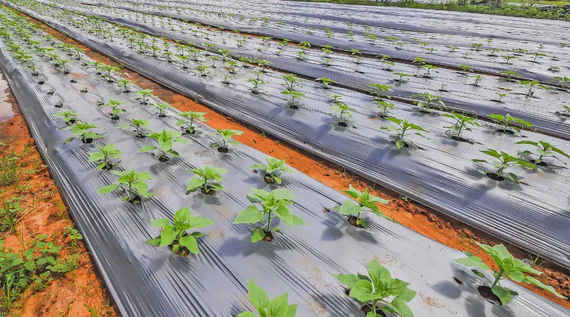
Black Masterbatch for Film Applications: Grades, Features, and Formulation Guide
Introduction Black masterbatch plays a vital role in the film industry — not just for coloration, but for enhancing …


Fire safety is not just a regulatory requirement — it’s a life-saving necessity.
Every year, countless incidents are caused by the ignition of polymer-based materials used in vehicles, homes, and electrical systems. When exposed to heat or flame, most plastics can burn rapidly, producing intense heat and smoke.
This is where Flame Retardants (FRs) play a crucial role.
These specialized chemical compounds are added to polymers to inhibit or delay ignition, reduce flame spread, and limit the release of toxic gases.
In short, they give people — and products — the time that saves lives.
Flame retardants don’t make plastics non-combustible, but they significantly slow the burning process and reduce the heat released during combustion.
Their primary function is simple yet vital:
To prevent or interrupt the combustion process before it escalates.
By doing so, they help manufacturers meet international fire safety standards across critical industries such as automotive, electrical, electronics, construction, and consumer goods.
To prevent combustion, it’s necessary to design a thermally stable polymer — one that resists decomposition into combustible gases under heat stress.
However, polymers that are highly thermally stable are often:
That’s why flame retardant technology is so essential.
By introducing the right flame retardant masterbatch, manufacturers can transform standard polymers into fire-safe materials without compromising performance or cost efficiency.
Flame retardants act in different phases of the combustion process — heating, decomposition, ignition, flame spread, and smoke production.
Depending on their chemistry, they can interfere in one or more of these stages to prevent sustained burning.
Here’s how they do it:
Cooling (Endothermic Action):
Certain flame retardants, such as aluminum hydroxide or magnesium hydroxide, absorb heat as they decompose. This reduces the temperature of the polymer surface and slows ignition.
Formation of Protective Layers:
Phosphorus-based flame retardants promote the formation of a char layer on the polymer surface. This layer acts as a thermal barrier, insulating the material beneath and blocking oxygen access.
Gas Phase Action:
Some flame retardants release non-combustible gases (like water vapor, nitrogen, or carbon dioxide) that dilute oxygen and combustible gases in the flame zone. This interrupts the chemical reactions that sustain burning.
Chemical Interaction with Radicals:
Halogen-based flame retardants (bromine or chlorine compounds) deactivate the highly reactive free radicals formed during combustion, effectively stopping the flame propagation chain reaction.
In every case, the goal is the same — to interrupt the combustion cycle and reduce the heat and fuel available for sustained burning.
There are several families of flame retardants, each suited for different polymers and processing conditions:
Halogenated Compounds (Brominated/Chlorinated):
Highly effective at low loadings and commonly used in ABS, HIPS, and textiles. However, environmental and health regulations have driven a gradual shift toward halogen-free alternatives.
Organophosphorus Compounds:
Used in both halogen-free and synergistic systems. They promote char formation and are effective in polyesters, polyamides, and polyurethanes.
Melamine-Based Systems:
Release inert gases like nitrogen, which dilute oxygen and cool the material. Often used in polyolefins and coatings.
Metal Hydroxides:
Aluminum hydroxide (ATH) and magnesium hydroxide (MDH) decompose endothermically, absorbing heat and releasing water vapor. These are non-toxic and widely used in halogen-free systems.
Nitrogen-Phosphorus Synergistic Systems:
Combine multiple mechanisms for high efficiency in halogen-free, low-smoke applications.
Beyond these, ongoing research explores nanocomposite flame retardants, intumescent coatings, and bio-based additives to further improve safety and sustainability.
Designing a polymer that resists combustion is not only a technical challenge — it’s also an environmental one.
While halogenated systems offer high performance, their potential to release corrosive or toxic gases during combustion has prompted global regulatory changes. Standards such as:
now encourage or mandate the use of halogen-free, low-toxicity flame retardants.
Modern formulations focus on phosphorus-based and mineral-based systems, which achieve effective fire protection without compromising recyclability or human health.
This transition marks an important step in the industry’s movement toward sustainable fire safety — designing materials that protect both people and the planet.
In a fire, seconds matter.
Flame retardant systems do not eliminate fire risk entirely — but they provide the critical time window that allows people to react, escape, and prevent property damage.
Here’s how that life-saving margin of safety works in real applications:
In all these areas, flame retardant masterbatches transform vulnerable materials into protective components — the silent safety layer that stands between heat and harm.
Flame retardants directly contribute to saving lives and protecting assets.
They enable materials to withstand the most demanding safety challenges while supporting design flexibility and cost efficiency.
At [Your Company Name], we engineer advanced flame retardant masterbatches that combine performance, processability, and environmental responsibility.
From halogen-free solutions to synergistic additive systems, our formulations ensure compliance with global standards and deliver dependable fire safety across industries.
Because in fire safety, prevention is protection — and every second counts.
Introduction Black masterbatch plays a vital role in the film industry — not just for coloration, but for enhancing …
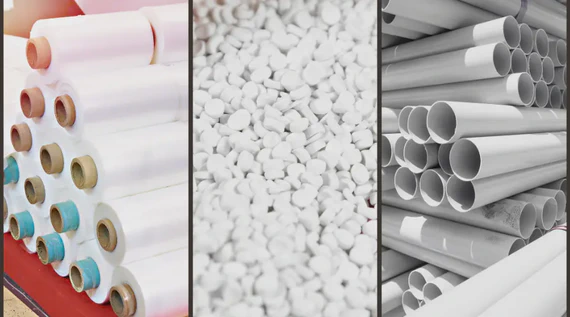
Introduction White masterbatch is more than a colorant — it plays a key role in determining a film’s opacity, UV …
With 80,000 MTA capacity and world-class manufacturing across India, Sonali delivers plastic solutions trusted around the globe.
Contact Us